
Peran Pemuda Melalui Learning Community dalam Menghadapi Perubahan Iklim di Kota Pekalongan
Article Sidebar
Main Article Content
Abstract
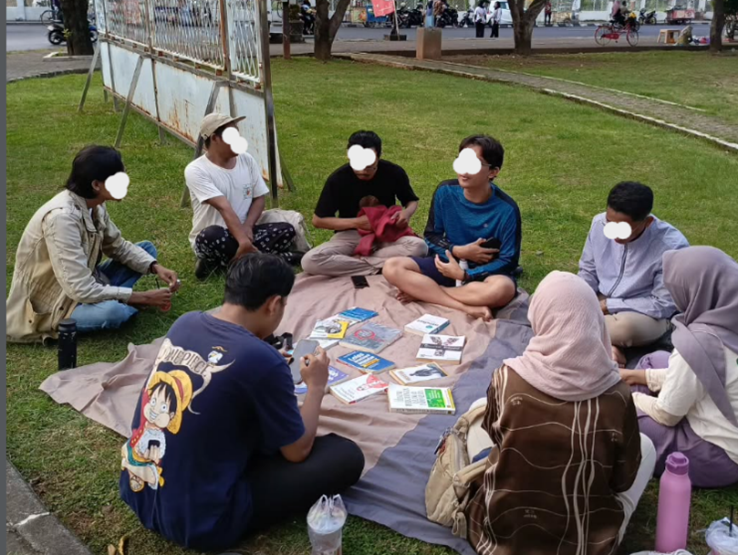
The purpose of this article is to address the challenges of climate change that affect the world, particularly in the city of Pekalongan. As an antithesis to the climate change problem, the author formulates the role of youth through learning communities in responding to climate change in Pekalongan. Social issues within the community include the lack of climate change outreach, the absence of local content related to disaster prevention in schools, and the prevailing myth that tidal flooding (rob) is caused by the anger of the guardian of the northern coast. As a result, the community tends to be resigned to the situation and blame external forces, lacking self-awareness and knowledge regarding climate change. In addressing climate change, education on climate change is needed as a foundational basis for building public awareness. This study employs a literature review method that examines all relevant literature associated with the research variables. The findings of this article describe the role of youth through learning communities in addressing climate change in Pekalongan, which can be carried out through strategies such as climate change–based Contextual Teaching and Learning (CTL), grumungan for disaster mitigation, grumungan for waste management, and climate change campaigns on social media. The results of this study provide new insights into how youth, through learning communities, can serve as a solution in the public education process for addressing climate change in Pekalongan.
Downloads
Article Details
Section

This work is licensed under a Creative Commons Attribution-ShareAlike 4.0 International License.
How to Cite
References
[1] N. Sunarmi, E. N. Kumailia, N. Nurfaiza, A. K. Nikmah, H. N. Aisyah, and I. Sriwahyuni, “Analisis Faktor Unsur Cuaca terhadap Perubahan Iklim Di Kabupaten Pasuruan pada Tahun 2021 dengan Metode Principal Component Analysis,” Newton-Maxwell J. Phys., vol. 3, no. 2, pp. 56–64, 2022. https://orcid.org/0000-0001-6397-2075
[2] N. Aripkah and K. N. Asufie, “Peran Pemuda Di Era Digitalisasi Dalam Menghadapi Perubahan Iklim Dengan Teknologi Dan Inovasi,” 366 | Semin. Nas. Sosiol. |, vol. 4, no. 1, pp. 366–386, 2023. https://proceeding.unram.ac.id/index.php/sensosio/article/view/559/502
[3] Pemerintah Kota Pekalongan, “Profil Resiko Perubahan Iklim Kota Pekalongan,” pp. 1–35, 2011.
[4] Ahmad Zuhad, “Ancaman Banjir Rob: Tahun 2030, 80 Persen Kota Pekalongan akan Berada di Bawah Laut,” Kompas.tv, 2021. https://www.kompas.tv/regional/247113/ancaman-banjir-rob-tahun-2030-80-persen-kota-pekalongan-akan-berada-di-bawah-laut?page=all#goog_rewarded
[5] P. Setiani, Sains Perubahan Iklim. Jakarta: Bumi Aksara, 2020.
[6] UNESCO, “Education for sustainable development,” UNESCO, 2024. https://www.unesco.org/en/sustainable-development/education
[7] G. Thunberg, No One Is Too Small to Make a Difference. London: Penguins Books, 2019.
[8] B. Hayudityas, “Pentingnya Penerapan Pendidikan Mitigasi Bencana Di Sekolah Untuk Mengetahui Kesiapsiagaan Peserta Didik,” J. Pendidik. Nonform., vol. 1, no. 2, pp. 94–102, 2020.
[9] O. R. Sutopo, “Pemuda dan Resistensi: Sebuah Refleksi Kritis,” J. Stud. Pemuda, vol. 2, no. 5, 2016. https://doi.org/10.22146/studipemudaugm.37954
[10] T. Al, A. Qodrifuddin, M. Zulva, and R. Aini, “Peningkatan Pemahaman Masyarakat terhadap Bahaya dan Dampak Bencana Alam Serta Penanggulangannya,” J. Pengabdi. Magister Pendidik. IPA, vol. 5, no. 1, pp. 1–5, 2022. https://doi.org/10.29303/jpmpi.v5i1.1400
[11] S. Zahara, “Peran sekolah dalam pendidikan migitasi bencana di sekolah menengah atas,” J. Pencerahan, vol. 13, no. 2, pp. 144–155, 2019. https://jurnalpencerahan.org/index.php/jp/article/view/5
[12] L. Stoll, R. Bolam, A. McMahon, M. Wallace, and S. Thomas, “Professional Learning Communities: A Review of The Literature,” J. Educ. Chang., 2006. https://doi.org/10.1007/s10833-006-0001-8
[13] H. Snyder, “Literature review as a research methodology: An overview and guidelines,” J. Bus. Res., vol. 104, pp. 333–339, 2019. https://doi.org/10.1016/j.jbusres.2019.07.039
[14] Nurhadi, Contextual Teaching and Learning (CTL). Jakarta: Dirjen Dikdasmen, 2002.
[15] Peraturan Badan Nasional Penanggulangan Bencaca, Pedoman Media Center Tanggap Darurat Bencana. 2013.
[16] R. A. Denison, “Waste Management in the United States: The Need for a New Framework.,” Environ. Def. Fund, 2008.
[17] E. Sunarsih, “Konsep Pengolahan Limbah Rumah Tangga Dalam Upaya Pencegahan Pencemaran Lingkungan Concept of Household Waste in Environmental Pollution Prevention Efforts,” J. Ilmu Kesehat. Masy., vol. 5, no. 3, pp. 162–167, 2014, [Online]. Available: http://ejournal.fkm.unsri.ac.id/index.php/jikm/article/view/158
[18] N. C. Elvania, Manajemen Dan Pengelolaan Limbah. Bandung: Widina Media Utama, 2022. [Online]. Available: https://repository.penerbitwidina.com/media/publications/408665-manajemen-dan-pengelolaan-limbah-48c31ad4.pdf
[19] L. Sebastian, “Pendekatan Banjir dan Penanggulangan Banjir,” Din. Tek. Sipil, vol. 8, pp. 162--169, 2008. https://doi.org/10.55266/pkmradisi.v1i3.66
[20] N. Meilinda, “Social Media On Campus: Studi Peran Media Sosial sebagai Media Penyebaran Informasi Akademik pada Mahasiswa di Program Studi Ilmu Komunikasi FISIP UNSRI,” J. Soc. Media, vol. 2, no. 1, p. 53, 2018, doi: 10.26740/jsm.v2n1.p53-64. https://doi.org/10.26740/jsm.v2n1.p53-64