
Penguatan Pengelolaan Sampah Berbasis Komunitas melalui Implementasi Budaya 5S di Bantul
Article Sidebar
Main Article Content
Abstract
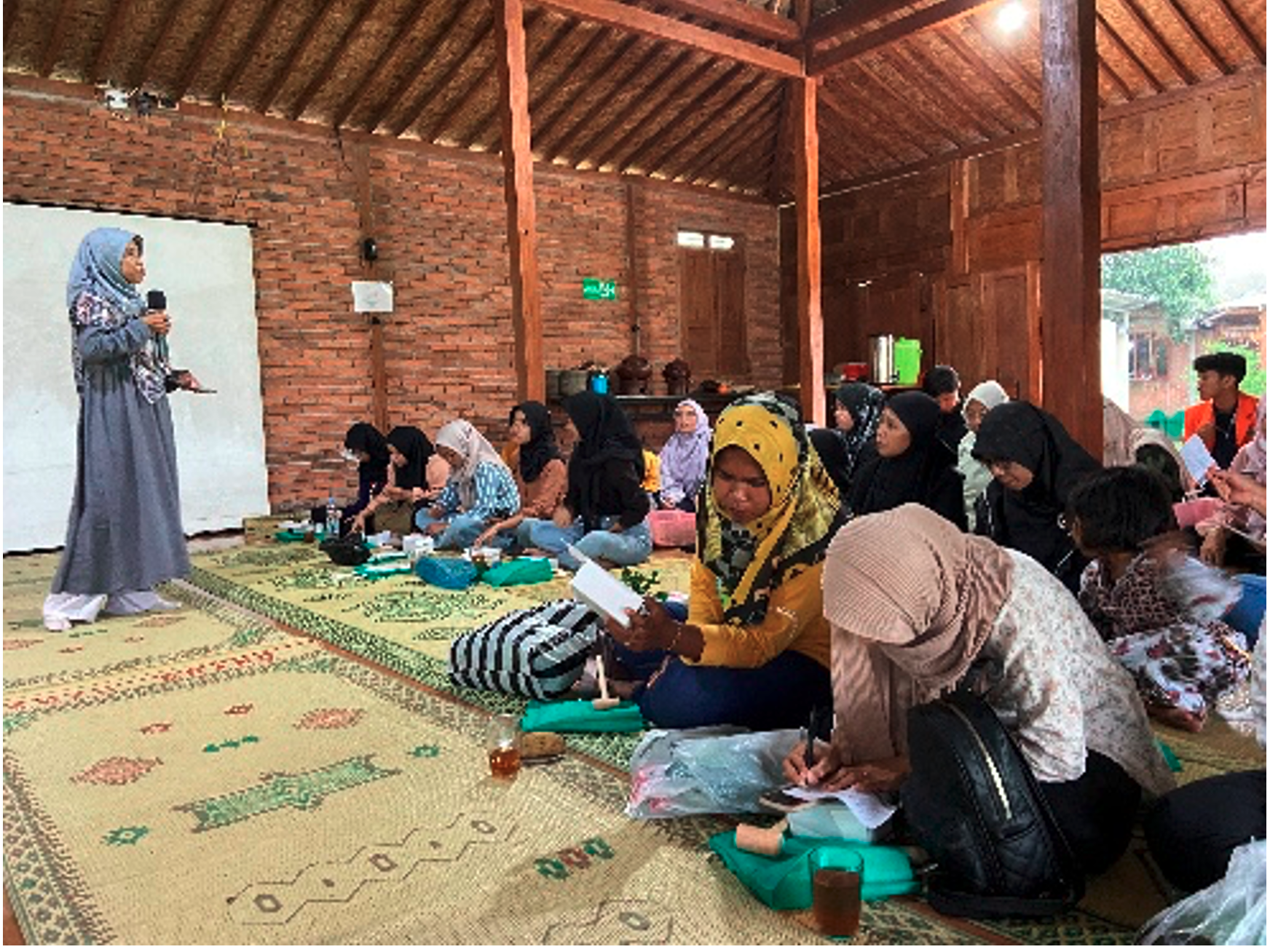
Waste management remains a crucial issue in many regions of Indonesia, including Bantul Regency, Yogyakarta Special Region. Increasing population growth and community activities have led to higher volumes of waste, requiring more effective and sustainable management strategies. One of the methods that can be applied to improve efficiency and create a positive work culture is the implementation of the 5S principles (Seiri, Seiton, Seiso, Seiketsu, Shitsuke). This community service program aimed to introduce and implement the 5S approach to the KSS Berkah Bersama to strengthen their capacity in managing waste. The activity was conducted on May 18, 2025, at the Pendopo Resto Sekar Mataram, Bangunjiwo, Bantul, involving 20 participants. A participatory approach was adopted through lectures, interactive games, and discussions. Pre-test and post-test questionnaires were used to measure participants’ understanding of the 5S concept. The results showed a significant improvement in participants’ knowledge and awareness. A 100% increase was recorded in understanding aspects of arrangement (Seiton), cleaning (Seiso), standardization (Seiketsu), and discipline (Shitsuke), while understanding of sorting (Seiri) increased by 75%. Interactive games proved effective in engaging participants and facilitating better comprehension of the 5S principles. Thiscommunity service activity successfully enhanced the knowledge and awareness of the Berkah Bersama group regarding the importance of applying the 5S culture in waste management practices. The implementation of 5S is expected to support the creation of a cleaner, safer, and more efficient working environment while serving as a best practice model for other community-based waste management initiatives
Downloads
Article Details
Section

This work is licensed under a Creative Commons Attribution-ShareAlike 4.0 International License.
How to Cite
References
1] E. D. H. P. Putri, A. Yulianto, D. M. Wardani, and L. E. Saputro, “Dampak Ekonomi, Sosial dan Lingkungan Terhadap Ekowisata Berbasis Masyarakat,” Jurnal Ilmiah Pariwisata, vol. 27, no. 3, pp. 317–327, 2022.
[2] F. Fadlia, U. Ramadhani, I. Ramadani, and M. Faraidiany, “Kerusakan Lingkungan di Lokasi Wisata Puncak Geurutee,” Jurnal Sosiologi USK (Media Pemikiran & Aplikasi), vol. 17, no. 1, pp. 63–73, 2023, doi: 10.24815/jsu.v17i1.29469.
[3] B. H. Purwojatmiko and M. Mustofa, “Peningkatan Pemahaman Budaya 5S Melalui Visualisasi Permainan di PT MAM,” Journal of Community Services in Sustainability, vol. 1, no. 2, pp. 87–94, 2023, doi: 10.52330/jocss.v1i2.196.
[4] R. Gapp, R. Fisher, and K. Kobayashi, “Implementing 5S within a Japanese context: An integrated management system,” Management Decision, vol. 46, no. 4, pp. 565–579, 2008, doi: 10.1108/00251740810865067.
[5] S. Miranda and E. Kusrini, “Peningkatan Produktivitas Melalui Penerapan 5S di IKM Kulit Sumber : Hasil Penelitian DPPM Penulis Tahun 2018,” Jattec, vol. 2, no. 2, pp. 92–102, 2021.
[6] A. S. Suryani, “Peran Bank Sampah Dalam Efektivitas Pengelolaan Sampah (Studi Kasus Bank Sampah Malang),” Aspirasi, vol. 5, no. 1, pp. 71–84, 2014, [Online]. Available: https://dprexternal3.dpr.go.id/index.php/aspirasi/article/view/447/344
[7] Z. Maulana, M. Chanif Hidayat, and I. Agustina, “Using Digital Marketing for Small and Medium Enterprises (SMEs) in Bumdes Remboko Sumberrejo Village Sleman Regency,” SPEKTA (Jurnal Pengabdian Kepada Masyarakat : Teknologi dan Aplikasi), vol. 3, no. 1, pp. 31–38, 2022, doi: 10.12198/spekta.v3i1.4563.
[8] S. N. Romlah, D. Fitriani, D. Susanti, S. Lokonathan, N. Nambiar, and F. Devasa, “Correlation between posture of job and musculoskeletal disorders complains among emergency departement nurses in general hospital distric of tangerang city,” Malaysian Journal of Medicine and Health Sciences, vol. 16, no. 4, pp. 119–124, 2020.
[9] J. R. Jokhu et al., “SPEKTA (Jurnal Pengabdian Kepada Masyarakat: Teknologi dan Aplikasi) Training in Logistics Management and Social Media Marketing for Small, Micro and Medium Enterprises in Bekasi Regency,” vol. 4, no. 2, p. 199, 2023, doi: 10.12198/spekta.v4i2.7997.
[10] S. Fatma, I. T. Hidayat, P. Alvionita, N. W. Widayati, and Rezikna, “Pemberdayaan Ekonomi Masyarakat Dengan Stik Kalakai Sebagai Produk Unggulan Desa Sei Asam,” Community Dev J, vol. 4, no. 1, pp. 123–131, 2023, [Online]. Available: http://journal.universitaspahlawan.ac.id/index.php/cdj/article/view/12083%0Ahttp://journal.universitaspahlawan.ac.id/index.php/cdj/article/download/12083/9236
[11] A. M. Satya, A. M. Pratiwi, and M. F. S. Wardhana, “Efektivitas Partisipasi Masyarakat dalam Pengelolaan Sampah Melalui Program Bank Sampah di Surabaya,” Socius: Jurnal Penelitian Ilmu-Ilmu Sosial, vol. 2, no. 9, pp. 41–49, 2025, [Online]. Available: https://doi.org/10.5281/zenodo.15268017